
Why Choose a Chocolate Conching Machine for Your Business?
Choosing the right Chocolate Conching Machine can shape flavour, texture, consistency, and production efficiency. It is not merely a larger mixing vessel. Inside the machine, chocolate liquor, cocoa butter, and sugar move through controlled heat and shear. Moisture and sharp volatile acids gradually leave the mass. The result should be smoother, rounder, and more stable chocolate.
Grand View Research valued the global chocolate market at approximately USD 119.39 billion in 2023. It also projects continued growth through 2030. This expansion increases pressure on manufacturers to deliver repeatable quality, not just attractive packaging. Bühler’s chocolate-processing guidance highlights controlled aeration, temperature, and residence time as important conching variables. However, market growth alone does not justify buying expensive equipment. Product recipe, batch size, energy use, cleaning time, and operator skill matter more.
Chocolate technologist Stephen T. Beckett states, “The main purpose of conching is to remove undesirable flavours and moisture from the chocolate mass.” His observation explains the machine’s practical value. A well-designed Chocolate Conching Machine can create predictable conditions, from a warm, flowing batch to a finished mass with a cleaner aroma. Small details matter. A poorly selected rotor may leave uneven texture. Excessive conching may waste energy or flatten delicate cocoa notes. That is the uncomfortable part: more processing does not always mean better chocolate. Manufacturers should compare trial results, laboratory data, service support, and total operating costs before deciding. Reports provide direction, but the factory floor gives the final answer.
Chocolate Conching Machine: Definition and Core Functions
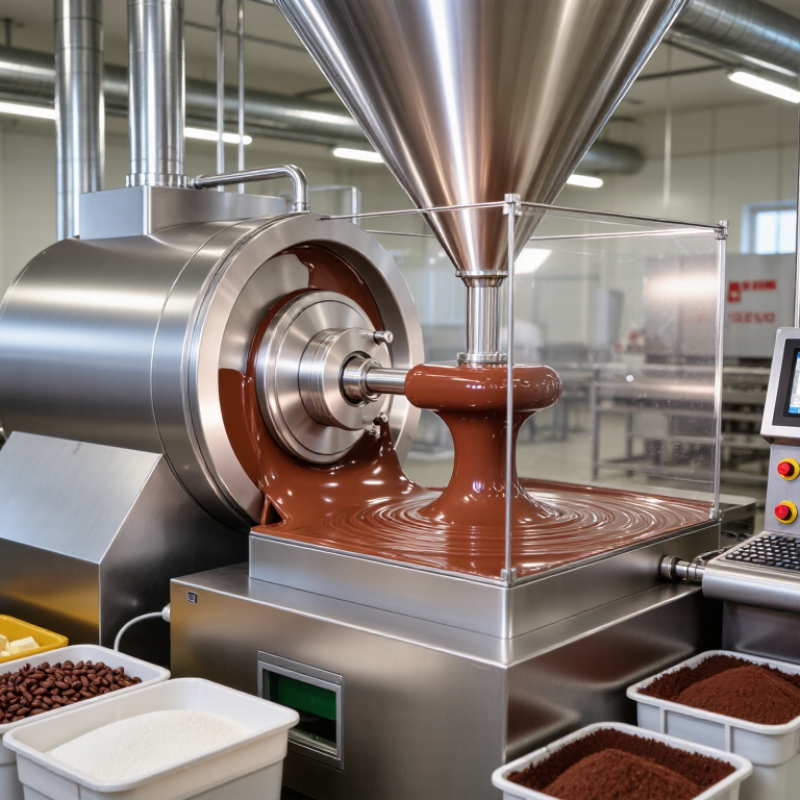
A chocolate conching machine is a heated vessel that continuously mixes, kneads, and aerates refined chocolate. It reduces harsh volatile compounds and distributes cocoa butter more evenly. The process can improve smoothness, aroma, and flavor balance. It is not simply a large mixer.
During operation, friction creates controlled heat while paddles move the chocolate through the vessel. This action helps coat cocoa and sugar particles with fat. Moisture and unwanted acidic notes can gradually decrease. Operators adjust temperature, mixing speed, and conching time according to the recipe. Dark chocolate often needs stronger flavor development, while milk chocolate requires gentler control.
The machine also supports consistent production. A stable process can reduce batch differences, especially when the same settings are recorded carefully. I have seen operators focus heavily on time, although temperature and ingredient quality may matter more. Longer conching is not automatically better. Excessive heat can flatten delicate cocoa aromas or damage the intended flavor profile. Cleaning access, scraper design, and accurate temperature measurement deserve equal attention. Small residues in corners can affect the next batch. That detail is easy to miss.
For a growing business, conching equipment may improve workflow and reduce manual labor. It can also create a more repeatable texture for molded, coated, or filled products. However, the machine cannot correct poor roasting, stale ingredients, or an unbalanced formula. Careful trials remain necessary. Keep detailed batch records. Evaluate viscosity, aroma, particle feel, and final setting behavior before changing production settings.
Why Choose a Chocolate Conching Machine for Your Business?
Chocolate Conching Machine: Definition and Core Functions
| Data Dimension | Typical Data or Operating Range | Core Function or Business Value | Practical Consideration |
|---|---|---|---|
| Machine Definition | A specialized processing machine that continuously mixes, aerates, heats, and refines chocolate mass. | Transforms partially refined chocolate into a smoother, more uniform, and more aromatic product. | It is normally used after ingredient refining and before final tempering or molding. |
| Typical Batch Capacity | Approximately 50–2,000 kg per batch, depending on machine design and production scale. | Supports product development, small-batch production, and medium-to-large manufacturing operations. | Select capacity according to daily output, batch size, available floor space, and cleaning requirements. |
| Typical Conching Time | About 4–24 hours for conventional processing; some modern systems use shorter cycles. | Provides time for flavor development, moisture reduction, and texture improvement. | Actual time varies with recipe, cocoa characteristics, particle size, equipment design, and target flavor. |
| Operating Temperature | Commonly around 45–80°C, with dark chocolate often processed at higher temperatures than milk or white chocolate. | Keeps the chocolate mass fluid while supporting controlled flavor and moisture development. | Temperature must be controlled carefully to protect milk components, cocoa aromas, and recipe consistency. |
| Mixing and Agitation | Continuous mechanical agitation throughout the conching cycle. | Improves ingredient distribution and helps coat cocoa and sugar particles with cocoa butter. | Uniform agitation helps reduce batch-to-batch variation and supports stable product quality. |
| Moisture Reduction | The process removes a portion of residual moisture; the exact amount depends on the recipe and starting material. | Helps reduce undesirable viscosity and supports a smoother mouthfeel. | Excessive processing can affect flavor, viscosity, and production cost, so moisture should be monitored. |
| Aeration and Volatile Removal | Controlled exposure of the chocolate mass to air during mixing. | Helps remove unwanted volatile acids and harsh odors while allowing desirable cocoa aromas to develop. | Ventilation and process control are important when working with strongly flavored cocoa liquor. |
| Particle-Size Target | Finished chocolate commonly targets particle sizes below approximately 30 micrometres for a smooth sensory profile. | Conching improves the coating and distribution of particles but does not replace dedicated refining equipment. | Particle size should be measured with appropriate laboratory equipment rather than judged only by appearance. |
| Chocolate Types | Suitable for dark, milk, and white chocolate formulations when the machine has compatible temperature and mixing controls. | Allows one production platform to support multiple product categories and recipes. | Milk and white chocolate require careful heat management because of their dairy and milk-powder content. |
| Heating and Cooling Control | Jacketed vessels or integrated thermal systems commonly provide controlled heating; cooling may be available depending on the model. | Maintains stable viscosity and supports repeatable processing conditions. | A calibrated temperature sensor and reliable control system are important for consistent results. |
| Product Consistency | Consistent mixing speed, temperature, time, and batch loading are the main control variables. | Improves repeatability in flavor, texture, viscosity, and appearance across production batches. | Standard operating procedures should record recipe, temperature, time, and endpoint criteria. |
| Production Efficiency | Automated timers, temperature controls, variable-speed drives, and programmable settings are commonly available. | Reduces manual intervention and makes longer processing cycles easier to manage. | Automation improves control but requires operator training and preventive maintenance. |
| Hygiene and Cleaning | Food-contact surfaces should be made from suitable hygienic materials, commonly stainless steel, and designed for accessible cleaning. | Supports food safety, allergen management, and efficient product changeovers. | Check drainage, access points, seals, surface finish, and cleaning procedures before purchase. |
| Energy Consideration | Energy demand depends on batch size, processing time, heating method, insulation, motor load, and ambient conditions. | Efficient insulation and process controls can help lower operating costs during extended conching cycles. | Compare rated motor power, heating capacity, cycle time, and actual workload rather than power rating alone. |
| Best Business Fit | Chocolate manufacturers seeking improved texture, flavor development, batch consistency, and scalable production control. | Provides a repeatable process step that can support premium product quality and wider recipe development. | The final equipment choice should match product type, throughput, labor availability, utilities, floor space, and total cost of ownership. |
Note: Operating ranges are general industry guidelines. Final settings should be validated through product trials, quality testing, and the equipment manufacturer’s technical specifications.
Related Posts
-
Unlocking the Secrets of Chocolate Manufacturing Equipment: A Deep Dive into Modern Techniques and Innovations
-

How to Achieve Perfectly Tempered Chocolate with a Tabletop Chocolate Tempering Machine
-
7 Essential Features to Look for in a Chocolate Coating Machine
-

What is a Chocolate Cutting Machine and How Does It Transform the Confectionery Industry
-
2026 Top Chocolate Processing Machine Trends and Innovations?
-

Comparing Top Chocolate Making Equipment: Which One Fits Your Production Needs Best?